Olives Patterns: A Strategic Asset for Modern Branding and Design
In the crowded marketplace of visual communication, distinctiveness is not merely an aesthetic choice; it is a strategic imperative. Olives Patterns represents more than a simple collection of vector graphics; it serves as a versatile toolkit for professionals seeking to elevate their brand identity through organic, timeless design elements. The collection features hand-drawn olive branches rendered in a sophisticated line art style, offering a graphic quality that resonates with authenticity and elegance. For entrepreneurs, marketers, and creators aged 20 to 50, integrating these seamless patterns into packaging, cosmetics, logos, or textiles can significantly enhance perceived value and customer engagement.
The decision to incorporate specific design assets into a business strategy often hinges on alignment with core values and target audience expectations. Olives Patterns provides a neutral yet rich visual language that supports goals related to sustainability, natural ingredients, and artisanal quality. Whether you are a small business owner launching a new skincare line or a publisher designing a high-end poster series, the ability to deploy consistent, high-quality imagery is crucial for operational efficiency and long-term results.
Strategic Alignment and Brand Positioning
Effective branding relies on consistency and clear communication. When utilizing Olives Patterns, the primary objective should be to reinforce your brand's narrative. The olive branch has historically symbolized peace, wisdom, and abundance, but in modern commercial contexts, it strongly signals natural origins and purity. This makes the pattern particularly potent for industries such as cosmetics, organic food products, and wellness services.
For decision-makers looking to position their products as premium or eco-conscious, the clean lines of the hand-drawn style offer a balance between rustic charm and professional polish. Unlike generic clip art, which can appear dated or mass-produced, the vector nature of this collection ensures scalability without loss of quality. This allows for seamless application across various touchpoints, from large-format wrapping paper to tiny product labels, ensuring that your visual identity remains intact regardless of the medium.
- Consistency: Maintain a unified look across all marketing materials by using the same pattern variations.
- Perceived Value: High-quality graphics suggest attention to detail, justifying higher price points.
- Narrative Support: Use the imagery to tell a story about natural ingredients or sustainable sourcing.
Operational Efficiency and Creative Versatility
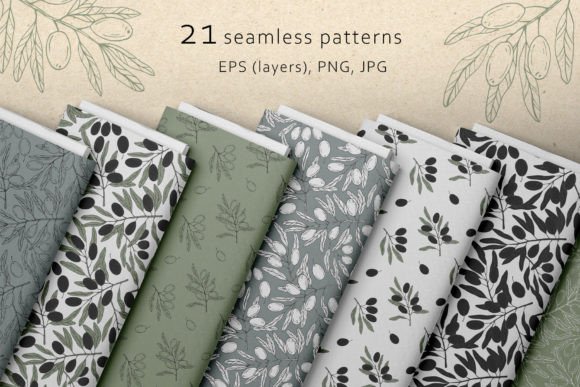
From an operational standpoint, time is a finite resource. The Olives Patterns collection is designed to streamline the creative workflow. The zip archive includes 21 seamless patterns, provided in multiple formats including EPS layered files, JPGs with colored backgrounds, and PNGs without backgrounds. This variety eliminates the need for extensive post-processing, allowing designers and freelancers to integrate assets immediately into their projects.
The inclusion of layered EPS files is particularly valuable for professionals who require customization. Being able to isolate specific branches or adjust colors within the original vector file means you can adapt the pattern to match exact brand color palettes without compromising the integrity of the line art. This flexibility supports rapid prototyping and iteration, enabling teams to test different visual directions quickly.
Furthermore, the seamless nature of these patterns is critical for applications requiring tiling, such as fabric printing, wallpaper, or digital backgrounds. By avoiding visible seams, the design creates an immersive experience that feels intentional and cohesive. For textile manufacturers or apparel designers, this technical capability translates directly into reduced waste and higher production yields.
Practical Applications Across Industries
The utility of Olives Patterns extends far beyond a single sector. Its adaptability makes it suitable for a wide array of use cases, each requiring a slightly different strategic approach.
- Packaging and Labels: In the retail space, packaging is often the first physical interaction a customer has with a product. Using olive branch motifs on cosmetic jars or wine bottles can subtly communicate luxury and natural composition. The line art style works exceptionally well on minimalist packaging designs where negative space is used effectively.
- Fabrics and Textiles: For fashion designers and home decor enthusiasts, the patterns serve as an excellent base for print-on-demand services. The seamless loops allow for continuous prints on fabrics, creating elegant dresses, tablecloths, or curtains that stand out in a saturated market.
- Digital Marketing and Web Design: While often overlooked, background textures play a vital role in user experience (UX). Subtle olive patterns can add depth to landing pages or email newsletters without distracting from the primary call-to-action. The PNG versions with transparent backgrounds are ideal for overlaying on complex web layouts.
- Branding and Logos: Although the patterns themselves are decorative, they can inspire logo concepts or serve as secondary elements in brand guidelines. They help establish a visual vocabulary that can be referenced throughout the brand's ecosystem.
Decision-Making and Intentional Usage
While the potential benefits of Olives Patterns are significant, relying on them without a clear plan can lead to diluted messaging. The most common pitfall in design consumption is "pattern fatigue," where visuals are applied randomly rather than strategically. To avoid this, creators must ask critical questions before implementation: Does this motif align with our current campaign goals? Will it resonate with our specific demographic?
For educators and bloggers, these patterns can enhance the readability and appeal of educational materials or blog headers, making complex information more inviting. However, the key lies in moderation. Overusing a decorative element can clutter the interface and obscure the message. The goal is to support the content, not overshadow it.
When approaching a project, consider the context of the final output. If the project targets a younger, trend-focused audience, the classic olive motif might need to be paired with bold typography and vibrant colors to feel contemporary. Conversely, for a heritage brand targeting an older demographic, the traditional line art style may already be perfectly suited. Understanding the nuances of your audience ensures that the design investment yields a positive return.
Risks of Unplanned Implementation
Using design assets without a strategic framework carries inherent risks. One major concern is the misalignment of tone. If a brand positions itself as futuristic or tech-driven, introducing organic, botanical patterns without careful integration could create cognitive dissonance for the consumer. Similarly, if the pattern is used in a context where it feels clichéd or overused, it may diminish the brand's perceived uniqueness.
Another risk involves technical limitations. While the collection offers high-quality vectors, users must ensure that the resolution and format are appropriate for the intended print size. Scaling up low-resolution previews or ignoring the layer structure in EPS files can result in pixelation or lost editing capabilities. Always verify the technical specifications against your production requirements before committing to a design direction.
Maximizing Long-Term Value
The true value of Olives Patterns lies in its longevity. Trends in graphic design shift rapidly, but classical motifs like the olive branch possess a timeless quality that transcends temporary fads. By incorporating these elements into your visual library, you build a foundation of assets that remain relevant for years. This contributes to cost-efficiency, reducing the need for constant re-designs or asset purchases.
For freelancers and agencies, having a curated set of high-quality patterns like this enhances the service offering. It allows for faster turnaround times and the ability to provide clients with immediate visual mockups. This speed and quality can be a decisive factor in winning contracts and building long-term client relationships. Moreover, the ability to customize the patterns demonstrates a level of expertise and dedication that clients appreciate.
Ultimately, the successful deployment of Olives Patterns requires a thoughtful approach that balances creativity with strategy. It is not enough to simply apply a pretty image; one must understand why that image matters. Whether used to decorate packaging, define a brand's aesthetic, or enhance a digital experience, the olive branch pattern offers a powerful tool for those willing to use it with intention. By focusing on clear goals, understanding the audience, and maintaining technical rigor, professionals can leverage this collection to achieve superior outcomes in their projects.
As you move forward with your next creative endeavor, consider how the organic elegance of olive branches can serve your broader objectives. Let the patterns be a bridge between your vision and your audience, providing a visual anchor that communicates quality, nature, and sophistication. With 21 distinct variations available in multiple formats, the possibilities for innovation are vast, limited only by your imagination and strategic foresight.