Spider Web Patterns Digital Papers: A Practical Evaluation for Creative Professionals
In the landscape of digital design assets, few categories offer as much atmospheric versatility as themed background textures. Spider Web Patterns Digital Papers represents a specific subset of these resources that serves a distinct purpose for creators ranging from graphic designers to event planners. While often associated with seasonal aesthetics, particularly around Halloween or horror-themed projects, the utility of this collection extends into broader applications where texture, depth, and a specific mood are required. This evaluation examines the practical value of a 12-design set, focusing on its technical specifications, usability across various mediums, and the tangible benefits it offers to professionals seeking high-quality vector-like textures without the complexity of creating them from scratch.
Technical Specifications and Quality Standards
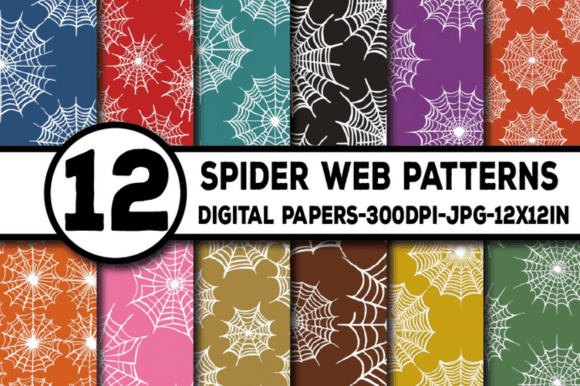
The foundation of any useful digital paper pack lies in its file integrity and resolution. For professionals who prioritize print output or high-resolution web displays, the specifications provided are critical. The collection delivers 12 unique designs, each rendered at a substantial size of 12 x 12 inches. However, the most significant metric here is the 300dpi resolution. In the context of commercial printing, 300dpi is the industry standard for sharpness; anything lower risks pixelation when scaled up, while higher resolutions can lead to unnecessarily large file sizes that slow down workflow.
Receiving these assets in a ZIP folder containing JPEG files suggests an immediate focus on compatibility. Unlike PSD or AI files which require specific software versions and layer management, JPEGs are universally recognized. They can be dragged and dropped into almost any design environment, from Adobe Photoshop and Illustrator to Canva and Microsoft Word. This format choice prioritizes ease of use over editability, making it ideal for users who need to apply a texture quickly without worrying about font linking or proprietary formats. The consistency of the 300dpi standard across all 12 designs ensures that a project remains cohesive regardless of which pattern is selected.
Versatility Beyond Seasonal Themes
While the visual motif of spider webs is inherently tied to autumn and horror genres, experienced designers know that texture is often more about mood than literal subject matter. Spider Web Patterns Digital Papers can serve functions far beyond party invitations. The intricate, lace-like geometry of web structures provides a natural overlay effect that adds complexity to flat designs.
For book cover designers, these patterns offer a ready-made backdrop that implies mystery, entanglement, or decay without requiring complex illustration work. When applied with blending modes like "Multiply" or "Overlay," the web structure can sit beneath text or imagery, adding a tactile quality that makes a digital image feel physical. Similarly, in the realm of scrapbooking and home decoration planning, these papers provide a textured base that breaks up solid colors, adding visual interest to layouts that might otherwise feel too sterile.
The application extends to digital environments as well. Website and blog backgrounds benefit from subtle textures that reduce eye strain compared to stark white or solid color fields. A low-opacity spider web pattern can create a sophisticated, slightly edgy aesthetic for portfolios or creative blogs without overwhelming the primary content. Even in clothing design, where textile patterns are crucial, these digital renderings can serve as initial concepts or sublimation prints for limited-run merchandise.
Practical Applications for Specific Audiences
The utility of this resource varies depending on the user's role within the creative ecosystem. For entrepreneurs and small business owners, time is a finite resource. Purchasing a pre-packaged set of 12 high-quality images allows for rapid prototyping. Instead of spending hours drawing a web pattern or searching for stock photos that may have inconsistent lighting or resolution, a designer can instantly apply one of these 12 options to a mockup.
- Event Planners and Party Decorators: The invitation market is saturated, but customization is key. These digital papers allow for the creation of bespoke stationery, including business cards, flyers, and wall decals. The ability to print at 300dpi ensures that even large-format posters or banners remain crisp.
- Educators and Content Creators: Teachers creating worksheets, newsletters, or classroom decorations often lack access to premium graphic tools. These accessible JPEGs provide a way to add professional polish to educational materials, perhaps for a unit on mythology, biology (arachnology), or seasonal events.
- Freelance Marketers: For social media campaigns, especially those running in Q4, having a library of thematic assets is essential. These patterns can be used to frame promotional graphics, ensuring brand consistency during holiday marketing pushes.
Usability and Workflow Integration
The delivery method—a single ZIP folder—streamlines the download process, but the real test of usability occurs during the editing phase. Because the files are JPEGs, they do not support non-destructive editing features like masks or adjustment layers in their raw form. Users must import them into their preferred software to manipulate opacity, hue, or saturation. This limitation is minor for most workflows but worth noting for advanced compositing tasks.
The 12-design variety is a strategic strength. It prevents the "pattern fatigue" that occurs when a single texture is repeated across multiple pages of a document or a series of social media posts. Having a range of densities—from sparse, delicate webs to dense, chaotic networks—allows a designer to control the visual weight of the background. Lighter patterns can be used for text-heavy areas where readability is paramount, while darker, denser patterns work best for headers or full-bleed images.
Potential Limitations and Considerations
No digital asset is without constraints. The primary limitation of this pack is its thematic specificity. If a project requires a neutral or corporate aesthetic, these spider web patterns will likely clash with the desired tone. Furthermore, because the files are raster-based (JPEG) rather than vector-based, scaling them beyond their original 12-inch dimensions will result in a loss of quality. Designers attempting to use these for massive outdoor signage would need to upscale significantly, which could introduce artifacts.
Additionally, the copyright terms associated with such packs vary. While the prompt implies a standard license, users must verify if the patterns are intended for personal use only or if they can be used in commercial products sold to third parties. For freelancers selling final deliverables, understanding the licensing agreement is a crucial step before integrating the asset into a client's branding.
Conclusion on Value and Longevity
Ultimately, Spider Web Patterns Digital Papers stands out as a functional tool rather than a novelty item. Its value proposition rests on the combination of high resolution, consistent formatting, and thematic versatility. For the professional who needs to produce high-quality printed materials or digital graphics efficiently, the inclusion of 12 distinct designs at 300dpi offers a strong return on investment.
It fits seamlessly into workflows that demand speed without sacrificing print quality. Whether used for the specific intent of Halloween decor or as a textural element in a broader design language, these papers provide a reliable foundation. The decision to utilize this resource should depend less on the season and more on the specific visual requirements of the project. When a design calls for a sense of intricacy, depth, or a specific atmospheric tension, this collection delivers the necessary components effectively. For creators looking to expand their asset library with versatile, high-fidelity textures, this pack represents a solid addition to their digital toolkit.