Y2K Abstract Seamless Patterns: A Comprehensive Guide to Retro-Futuristic Design
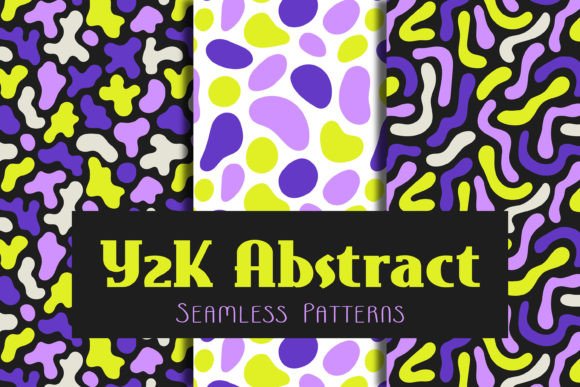
The digital landscape is currently experiencing a significant resurgence of early 2000s aesthetics, often referred to as Y2K. Within this broader trend, Y2K Abstract Seamless Patterns have emerged as a distinct and versatile design element. This specific collection captures the bold and energetic spirit of the era by combining neon tones with fluid, organic shapes. Unlike the rigid geometric patterns of previous decades or the minimalist flat designs that dominated the late 2010s, these patterns offer a striking palette of neon yellow, purple, lime green, and black. The result is a nostalgic yet futuristic aesthetic that feels both familiar and new.
For designers, entrepreneurs, and creatives aged 20 to 50, understanding the nuances of this style is crucial before integrating it into commercial projects. While many trends fade quickly, the Y2K abstract movement has proven resilient due to its adaptability across various media. However, selecting the right assets requires careful evaluation of file formats, resolution, and application scope. This analysis explores what makes these patterns unique, how they compare to alternative styles, and where they fit best in modern design workflows.
Distinguishing Features of the Y2K Abstract Aesthetic
What sets Y2K Abstract Seamless Patterns apart from other retro-inspired graphics is the specific interplay between color and form. The early 2000s were characterized by a transition from analog to digital, resulting in a visual language that embraced artificiality. These patterns reflect that era by utilizing high-contrast neon colors against deep black backgrounds. The use of neon yellow, purple, and lime green creates an immediate visual impact that is difficult to achieve with muted earth tones or pastel palettes common in contemporary "cozy" aesthetics.
The shapes themselves are equally critical to the identity of this collection. Rather than using strict grid lines or perfect circles, the designs feature fluid, organic movements. This approach mimics the glitch art and liquid metal effects popularized by software interfaces and music videos from the turn of the millennium. The seamless nature of the files ensures that the pattern can be tiled infinitely without visible breaks, which is essential for large-scale applications like wallpaper or fabric printing.
When evaluating this collection, one must consider the technical specifications. The package includes three JPG and three EPS files, each sized at 3600 x 3600 pixels (12" x 12") with a high resolution of 300 dpi in RGB mode. This level of detail is vital for print-on-demand scenarios where image clarity determines the perceived quality of the final product. The inclusion of vector-based EPS files alongside raster JPGs offers flexibility; designers can scale the vector versions to any size without loss of quality, while the JPGs provide immediate usability for web and screen-based projects.
Comparing Y2K Abstract Patterns to Alternative Styles
Designers often face the challenge of choosing between multiple retro-inspired options. To make an informed decision, it is helpful to compare Y2K Abstract Seamless Patterns with other prevailing styles such as Memphis Design, Cyberpunk Gradients, and Modern Minimalism.
- Memphis Design vs. Y2K Abstract: Memphis design, popular in the 1980s, relies heavily on geometric chaos, squiggles, and polka dots. While it shares a sense of playfulness with Y2K, it typically uses a different color scheme involving pinks, blues, and browns. If a project requires a more structured, architectural feel, Memphis might be the better choice. However, for a vibe that feels more fluid, electric, and digitally native, Y2K abstract patterns are superior.
- Cyberpunk Gradients vs. Y2K Abstract: Cyberpunk aesthetics often utilize dark backgrounds with glowing gradients and metallic textures. While both styles share a futuristic outlook, Cyberpunk tends to be darker and more industrial. The Y2K collection described here leans brighter, utilizing solid blocks of neon color rather than smooth gradient transitions. This makes the Y2K patterns more suitable for apparel and branding that needs to stand out brightly rather than blend into a moody atmosphere.
- Modern Minimalism vs. Y2K Abstract: Minimalist design strips away elements to focus on function, often using white space and simple typography. In contrast, Y2K abstract patterns are maximalist by nature. They embrace clutter and density. For brands aiming to convey exclusivity and simplicity, minimalism is appropriate. Conversely, if the goal is to evoke nostalgia, energy, and a sense of chaotic creativity, the Y2K patterns provide the necessary visual weight.
A key tradeoff in choosing this style is audience perception. While younger demographics may view these patterns as trendy and exciting, older audiences might find the high contrast and neon saturation overwhelming. Therefore, the context of the project is a primary decision factor. These patterns work exceptionally well for youth-oriented fashion or tech products but may require modification when applied to corporate or conservative branding.
Practical Applications and Use Cases
The versatility of Y2K Abstract Seamless Patterns allows them to be integrated into a wide array of industries. Their strength lies in their ability to transform mundane objects into statement pieces. Below are specific scenarios where this collection excels.
Print on Demand and Apparel
In the realm of Print on Demand (POD), visual distinctiveness is paramount. The high-resolution nature of these files (300 dpi) makes them ideal for direct-to-garment printing. When applied to crop tops, jackets, leggings, or accessories like phone cases and backpacks, the neon colors pop against various fabric backgrounds. The seamless tiling ensures that the design wraps naturally around curved surfaces, maintaining the integrity of the organic shapes. For streetwear brands looking to capture the current retro-futuristic wave, these patterns offer a ready-made solution that avoids the need for custom illustration.
Digital Design and Web Assets
Social media platforms are increasingly driven by visual trends, and Y2K aesthetics have found a strong foothold there. These patterns serve as excellent backgrounds for Instagram stories, website headers, and digital artwork. The RGB color mode ensures that the colors render accurately on screens, preventing the dullness that sometimes occurs when converting print files for digital use. Using these patterns can instantly elevate a brand's digital presence, signaling that the entity is up-to-date with current cultural shifts.
Branding and Packaging
For cutting-edge brands, packaging is a critical touchpoint. Traditional packaging often relies on solid colors or simple logos. By incorporating Y2K Abstract Seamless Patterns, brands can create a shelf presence that screams innovation. Whether used for cosmetic boxes, beverage cans, or limited-edition marketing materials, the combination of black and neon hues conveys a sense of boldness. This is particularly effective for beauty products targeting Gen Z or tech gadgets that want to emphasize their futuristic capabilities.
Home Decor and Stationery
The trend extends beyond commerce into personal living spaces. Applying these patterns to home textiles like pillowcases and curtains can inject a burst of energy into a room. Similarly, for stationery items such as notebooks and planners, the designs offer a functional yet stylish option for students and professionals who appreciate a creative workspace. The durability of the print is supported by the high-quality source files, ensuring that the vibrant colors do not fade quickly after repeated use or washing.
Evaluation Factors and Decision Making
Selecting the right asset involves more than just liking the look; it requires assessing technical compatibility and long-term viability. When evaluating Y2K Abstract Seamless Patterns, several factors should guide the decision-making process.
File Format Flexibility: The inclusion of both JPG and EPS files is a significant advantage. JPGs are universally compatible and easy to use for quick mockups or web banners. However, for any physical production requiring scaling—such as large format posters or full-wrap garment prints—the EPS vector files are indispensable. They allow for infinite resizing without pixelation. If a project requires only small-scale digital use, the JPGs suffice. If physical manufacturing is involved, the vector capability is non-negotiable.
Color Mode Considerations: The files are provided in RGB. This is optimal for digital displays and most modern digital printers. However, for traditional offset printing processes that rely on CMYK, users may need to convert the colors. It is important to note that neon colors in RGB can sometimes shift when converted to CMYK, potentially losing some vibrancy. Designers should test a proof before committing to a large print run to ensure the final output matches the intended aesthetic.
Scalability and Resolution: At 3600 x 3600 pixels, the resolution is sufficient for most standard print sizes up to 12 inches. For larger applications, such as billboards or wall murals, the vector EPS version becomes essential. Relying solely on the raster JPG for large-scale expansion would result in a blocky, low-quality image. Understanding this limitation helps users avoid costly mistakes in production.
Longevity of Trend: While Y2K is currently popular, trends are cyclical. The question arises: will this style remain relevant? Given the enduring appeal of retro-futurism and the specific niche of "abstract" design, these patterns have a higher chance of longevity compared to more literal Y2K motifs like butterfly clips or chrome text. The abstract nature allows them to be interpreted in various ways, making them adaptable even as specific sub-trends within Y2K evolve.
When to Choose Y2K Abstract Patterns and When to Look Elsewhere
Ultimately, the decision to use Y2K Abstract Seamless Patterns depends on the specific goals of the project. These patterns are the right choice when the objective is to create a bold, energetic, and nostalgic impression. They are particularly effective for brands wanting to differentiate themselves through high-contrast visuals and for products targeting a demographic that values individuality and retro culture.
However, there are situations where this style may not be the best fit. If a brand identity is built on trust, stability, and subtlety—such as in financial services or healthcare—the aggressive neon palette might be too distracting. Similarly, for projects requiring a clean, professional, or understated look, the complexity of these organic shapes could detract from the core message. In such cases, simpler geometric patterns or monochromatic designs would be more appropriate.
Furthermore, if the target market is strictly international and the design needs to adhere to specific cultural color restrictions, the specific combination of neon yellow and purple might not resonate universally. Cultural context plays a role in color psychology, and what reads as "exciting" in one region might read as "loud" in another.
In conclusion, Y2K Abstract Seamless Patterns represent a powerful tool in the modern designer's arsenal. With their high resolution, versatile file formats, and distinct aesthetic, they offer a robust solution for a variety of creative endeavors. By carefully weighing the strengths of this collection against the requirements of the project, creators can leverage this retro-futuristic style to produce work that is both visually striking and commercially viable.